

Projects
Our projects span the African diaspora, focused on breast and prostate cancer outcomes
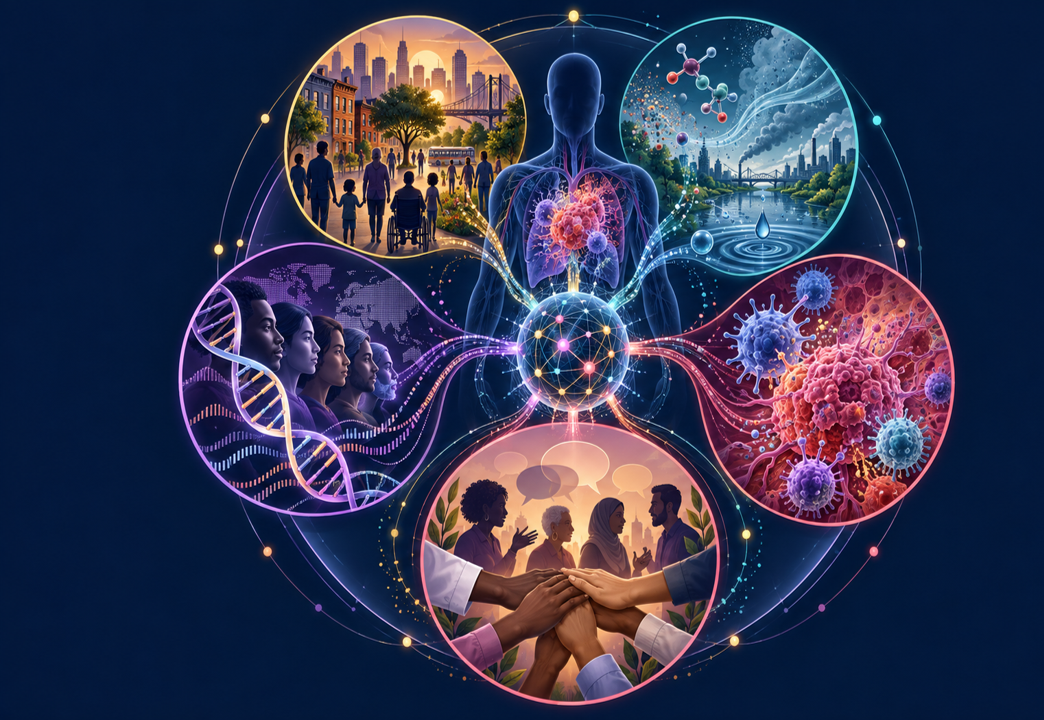
SAMBAI - Societal Ancestry Molecular Biology Analyses of Inequities
Big Ideas, Real Impact.
SAMBAI - Societal Ancestry Molecular Biology Analyses of Inequities Big Ideas, Real Impact.
Driven by curiosity and built on purpose, this is where bold thinking meets thoughtful execution. Let’s create something meaningful together.

Quantifying genetic ancestry to detect differential gene expression changes
Ancestry-Associated Gene Network Changes

Gene expression patterns associated with ancestry reveal relatedness among race groups
We evaluate TNBC subtypes by RNA extraction and sequencing from two hundred prospectively-acquired samples, evenly distributed between African American, White/Caucasian American; Ghanaian; and Ethiopian patients. We will evaluate the known six TNBC major subtypes via the publicly-available web-based tool TNBCtype. We utilize anthropology research tools to generate hypotheses regarding the interactions of population migration patterns and reproductive risk factors on TNBC pathogenesis.

Inclusion of multiple ancestry groups allows discovery of unique risk among ethnicity
African - Specific Risk of TNBC Subtypes
Our African-enriched international cohort allows investigations of population-private risk, which is dispersed throughout the modern African diaspora - observed as increased frequency of Triple Negative Breast Cancer (TNBC) among women of West African descent, globally.


Expression of DARC/ACKR1 is a driver of tumor infiltration and inflammatory status in tumors
DARC side of tumor immunology
This project will test the hypothesis that DARC expression in tumor cells alters tissue chemokine levels to modify the host immune response to tumorigenesis, and that absence of DARC expression on blood cells as a result of the African-specific Fy- allele alters circulating chemokine levels, altering the tumor microenvironment and enhancing tumor aggression.
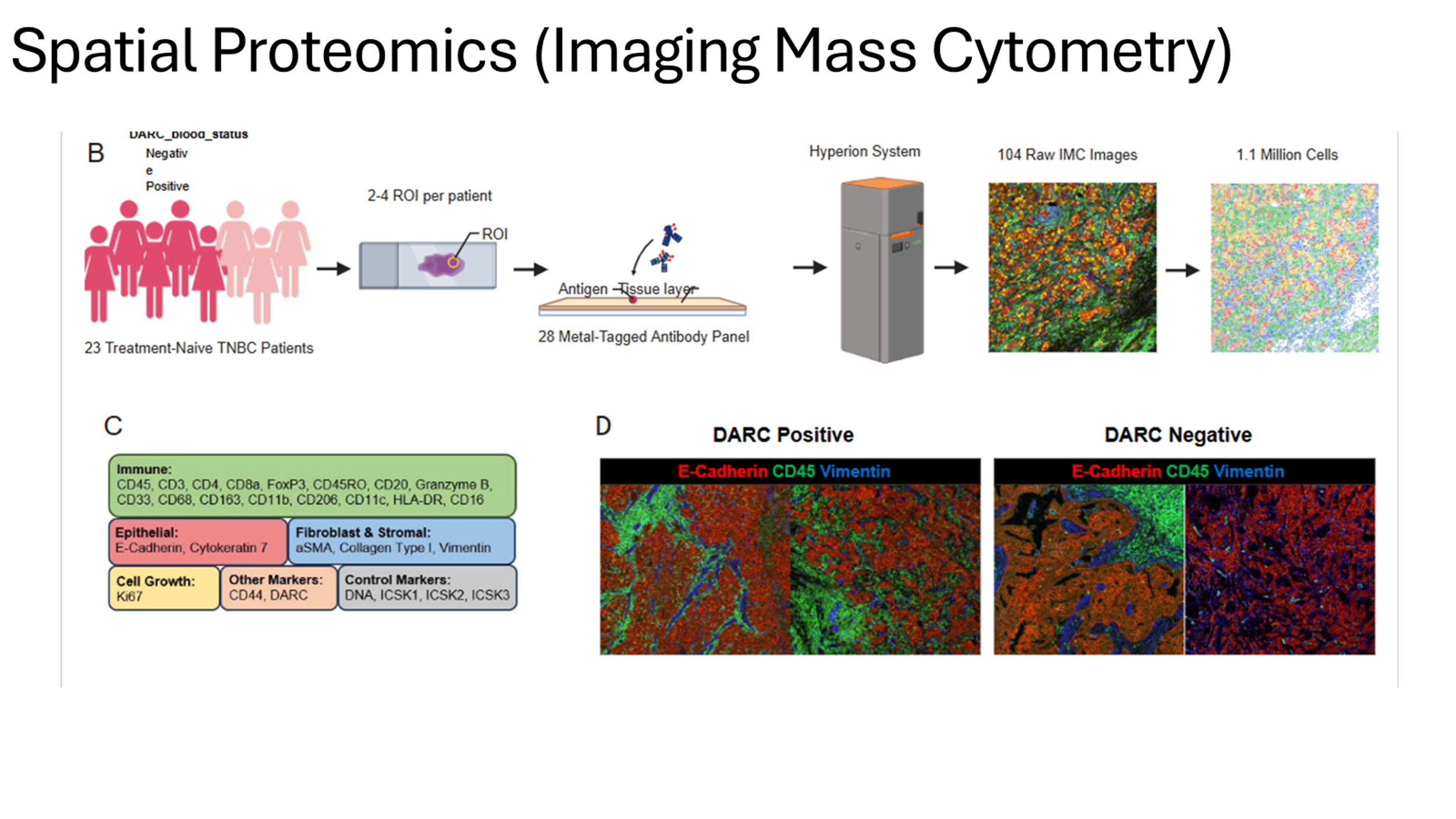
'When we compare DARC-positive and DARC-negative tumors, we see substantial heterogeneity. DARC tumor cells are unique
Immunological functions vary in DARC-high tumor environments
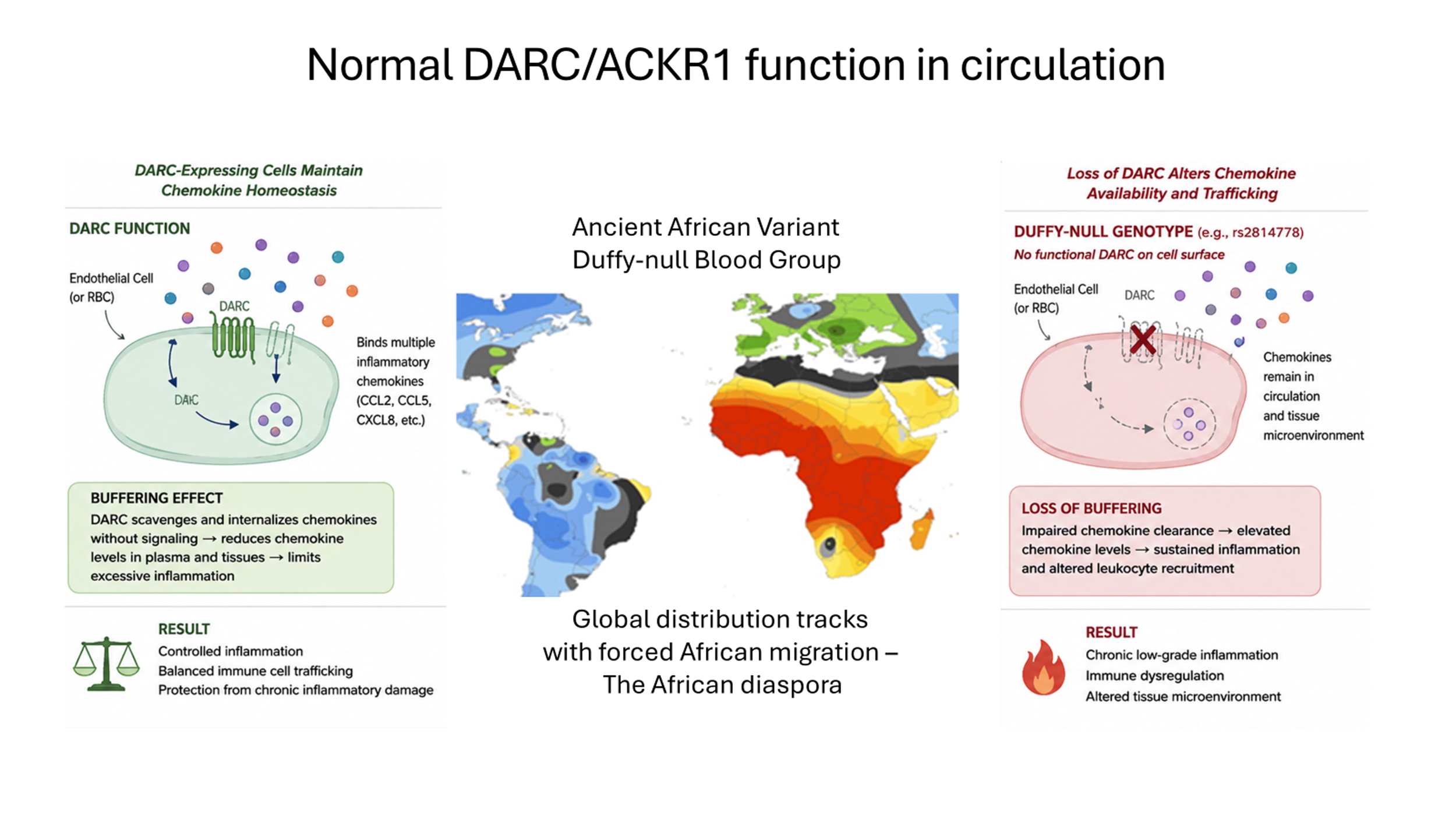
Consequences of Duffy Null
In breast cancer, we began by asking whether DARC/ACKR1 expression relates to inflammation and immune infiltration.
-
The common Duffy-null blood phenotype concerns circulating erythrocytes; it does not mean that ACKR1 is absent from every tissue. Red-cell binding, endothelial chemokine presentation and tumor-associated expression are different biological variables. We measure them separately rather than using one as a surrogate for all three.
-
Duffy-null allele disrupts erythroid ACKR1 expression on red blood cells while preserving other tissue contexts such as endothelium.
The allele rose in malaria-endemic regions and is common in populations with West African ancestry.
Be explicit: this is an evolutionary genetics case study, not a racial determinism claim.
On the left, erythrocytes express ACKR1 and provide a chemokine-binding compartment. On the right, the Duffy-null erythrocytes lack that compartment. The important question is not simply whether every chemokine goes up or down. It is how binding and distribution change what we measure in blood and what immune cells encounter. This is a schematic, not a simulation of concentrations in an individual patient.
At the vascular interface, the role is different. Endothelial ACKR1 can transport and present tissue-derived chemokines, supporting recruitment and passage of leukocytes into tissue. In a tumor, this motivates a model linking the local chemokine environment to immune entry and spatial organization. But the animation is a conceptual bridge: our patient data must test which cells are present, where they are, and what that means for function.