

The first definitive link between African ancestry and the TNBC
LANDMARK Publication
Women of sub-Saharan African descent have disproportionately higher incidence of triple-negative breast cancer (TNBC) and TNBC-specific mortality across all populations. Population studies show racial differences in TNBC biology, including higher prevalence of basal-like and quadruple-negative subtypes in African Americans (AA). However, previous investigations relied on self-reported race (SRR) of primarily U.S. populations. Due to heterogeneous genetic admixture and biological consequences of social determinants, the true association of African ancestry with TNBC biology is unclear. To address this, we conducted RNA sequencing on an international cohort of AAs, as well as West and East Africans with TNBC. Using comprehensive genetic ancestry estimation in this African-enriched cohort, we found expression of 613 genes associated with African ancestry and 2,000+ associated with regional African ancestry. A subset of African-associated genes also showed differences in normal breast tissue. Pathway enrichment and deconvolution of tumor cellular composition revealed that tumor-associated immunologic profiles are distinct in patients of African descent.
Our comprehensive ancestry quantification process revealed that ancestry-associated gene expression profiles in TNBC include population-level distinctions in immunologic landscapes. These differences may explain some differences in race-group clinical outcomes. This study shows the first definitive link between African ancestry and the TNBC immunologic landscape, from an African-enriched international multiethnic cohort.
The African cluster separated into two subnodes, but the divergence was largely driven by an upregulated gene signature found among AA and not seen among our African patients. We hypothesized that this signature represents distinct environmental influences that are unique to AA patients. Strikingly, signature pathway analyses determined that several known canonical pathways were enriched in AAs compared with Ghanaians and Ethiopians (P < 0.05), including several related to comorbidities that may reflect unknown comorbidity health status in our patient cohort.

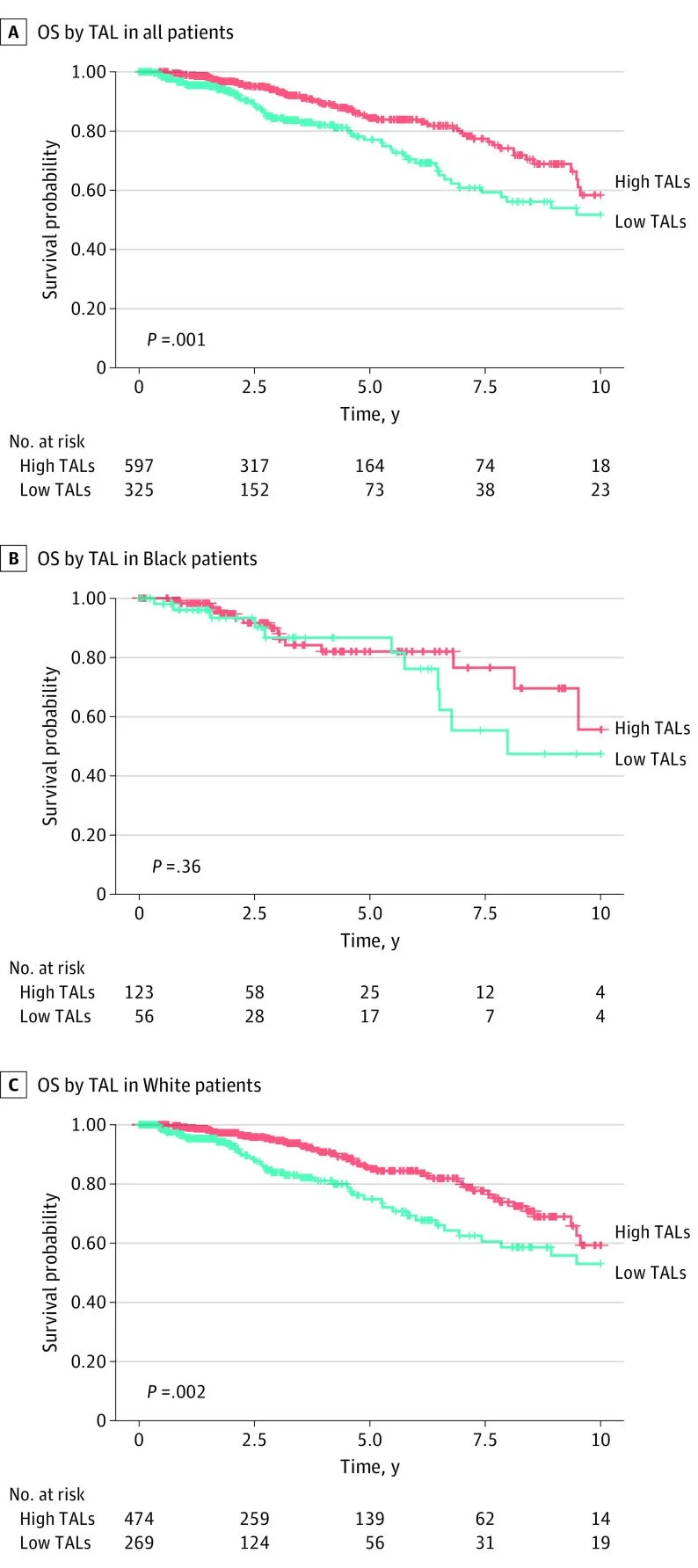
Tumor-Associated Lymphocytes and Breast Cancer Survival in Black and White Women
Figure.. Overall Survival (OS) by Tumor-Associated Lymphocytes (TALs) OS by TALs in all patients (A) and stratified by Black (B) and White (C) women. Black patients have no survival benefit from TALs.
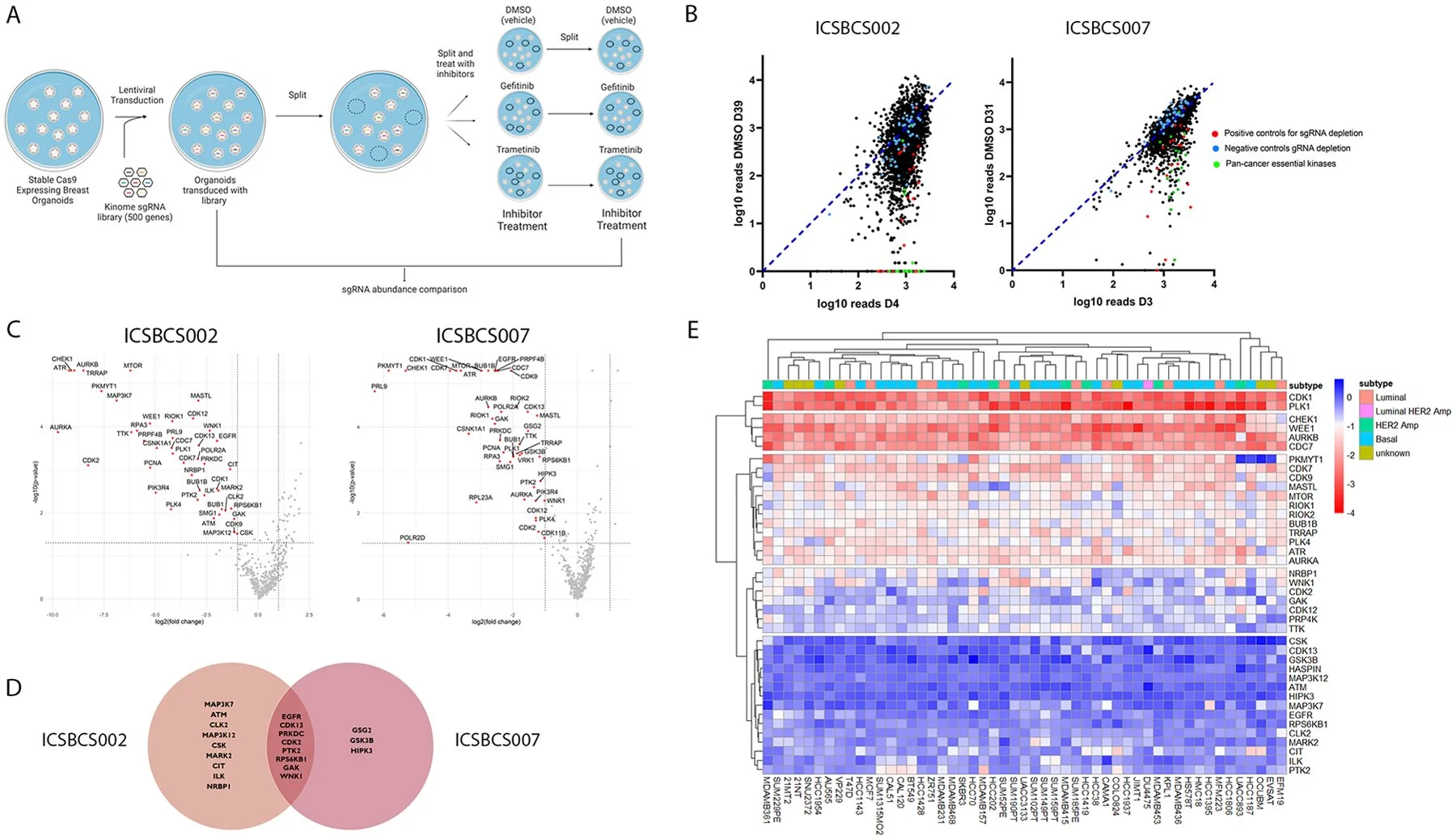
Kinome-Focused CRISPR-Cas9 Screens in African Ancestry Patient-Derived Breast Cancer Organoids Identify Essential Kinases and Synergy of EGFR and FGFR1 Inhibition
Finding new treatment targets in patient-derived breast tumors
Precision medicine uses information about a person’s cancer to help guide treatment. Often, researchers look for changes in tumor DNA that a drug might target. But cancer cells can also depend on genes that have no detectable mutation. Finding those dependencies could reveal additional treatment options.
To study this, we built a collection of small, three-dimensional breast tumors grown from patients’ samples, called organoids. The collection includes samples from populations often left out of cancer research, including patients in West Africa. Because organoids come directly from tumors, they offer a way to test which genes those tumors need to keep growing.
We used CRISPR, a gene-editing tool, to switch off genes involved in cell growth one at a time. This helped us identify several genes that the organoids depended on. We then tested whether blocking those pathways with drugs could slow growth. In the organoids studied, combining drugs that block FGFR1 and EGFR was more effective than expected from either drug alone.
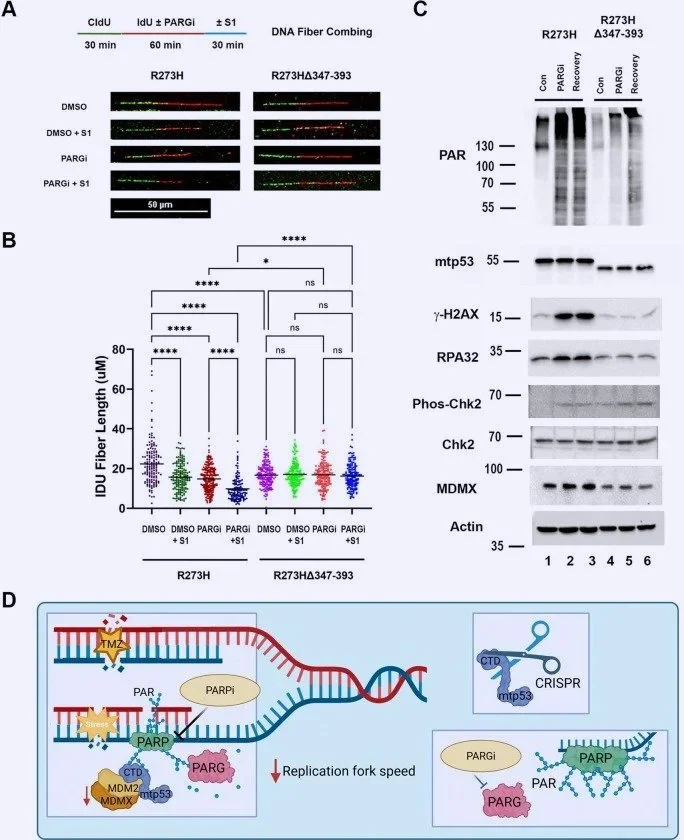
Mutant p53 Directs PARP to Regulate Replication Stress and Drive Breast Cancer Metastasis
A potential weakness in triple-negative breast cancer
Triple-negative breast cancer is an aggressive form of breast cancer with limited treatment options. In about 80–90% of these tumors, the TP53 gene is mutated. Some mutant forms of its protein, p53, may do more than lose their usual protective role: they may help cancer cells survive the DNA damage that builds up as they divide.
Our research examined how one form of mutant p53, called R273H, works with PARP, a protein involved in DNA repair. We found that mutant p53 helps bring PARP to sites where DNA is being copied, allowing cancer cells to keep dividing under stress. A small region at the end of the mutant p53 protein appears to be important for this process.


“Quadruple negative” breast cancers in African American women ….
Subtypes of TNBC could make all the difference in outcomes


MicroRNA profiling of novel African American and Caucasian Prostate Cancer cell lines …
Epigenetic changes have cascading impact on gene networks and are modifiable by environmental cues